Category Archives: Bill gave a talk

Talk: Architecting for the Cloud at Nashua Cloud .NET User Group

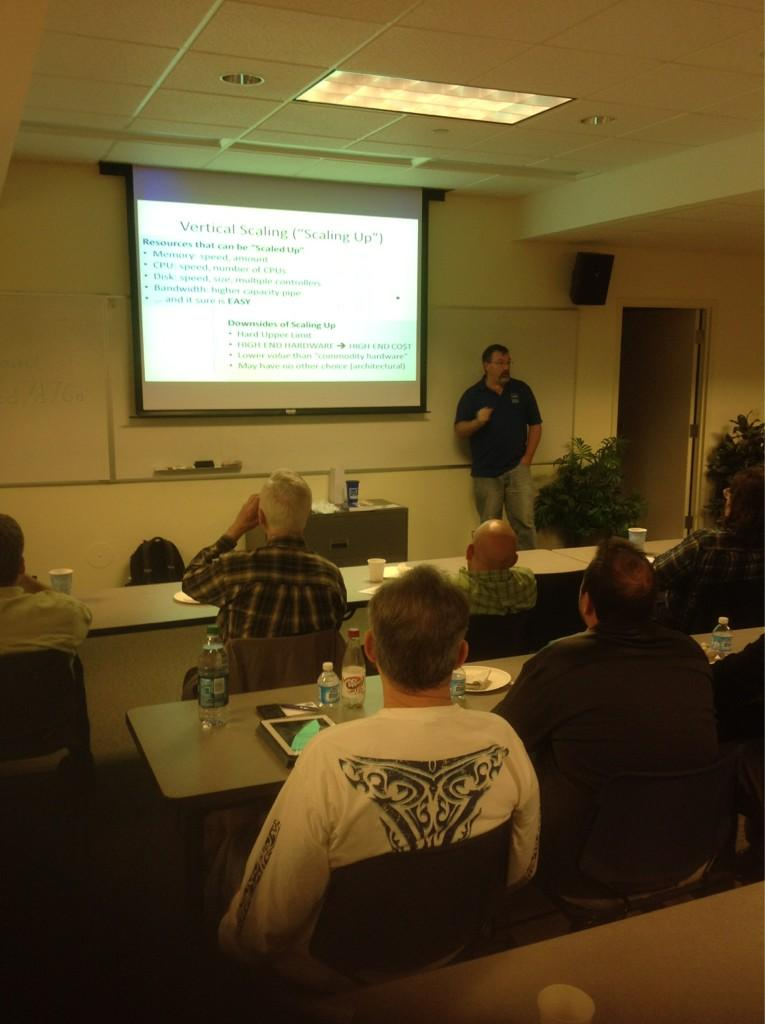
Last night I had the privilege of speaking at the Nashua .NET Cloud User Group in Nashua, NH. It was an engaged group to be sure – thanks for all the great questions.

A few followups:

  • Azure VM pricing: the $0.013/hour pricing mentioned for Extra Small instances of the Infrastructure as a Service (IaaS) Virtual Machine is shown here to be a promotional price, with the regular price of $0.02/hour (two cents per hour) kicking in on June 1. The architectures we spoke of in the talk used Platform as a Service (PaaS) Virtual Machines and the pricing for those is very similar, though slightly lower, and is shown here.
  • How many customers does Azure have: here is the 10,000 number that Udai shared, which is from was about three years ago when most of the tech world had not yet even heard of Azure. More recently,  it was mentioned there are 200,000 Azure customers and it has passed $1 billion in revenue. So, according to those numbers, it appears to have grown 20x in a little less than three years. Additional interesting numbers mentioned here and here.
  • We focused on use of Cloud Services last night, but we also mentioned Virtual Machines (part of what Microsoft is calling Infrastructure Services, like IaaS) and Web Sites, noting all use different approaches. You can read more about all of them here where you’ll see write-ups for each specific area.
  • I mentioned that Blob Storage is also being used to support the persistent disks on the Infrastructure Services Virtual Machines, in part-enabled by new high performance network architecture. I wrote about some of this before in a blog post titled Azure Cloud Storage Improvements Hit the Target.

The deck I used follows.

Architecting for the Cloud — NH Azure — 15-Mar-2013 — Bill Wilder (blog.codingoutloud.com)

My book, if you are interested, is described here. And the Boston Azure Cloud User Group can be found here.
Cloud Architecture Patterns book

Clash of the Clouds Followup

Last night, Mark Eisenberg and I represented the Windows Azure Cloud Platform in a Clash of the Clouds panel discussion/debate opposite Erik Sebesta  and Ed Brennan who represented the Open Source cloud alternatives. Erik & Ed declared OpenStack to be the strongest of the open source options today, so it became about Azure vs. OpenStack.

While I will not attempt to reproduce the discussion (sorry!, though there are a few photos), I do want to follow up on a few questions that I offered to provide references on. If you have further questions, please feel free to put a comment on this post. Also, at the end of this post, you will find a link to the short “Azure in 3 minutes or less” deck we used to introduce the Windows Azure Cloud Platform at the very beginning (per the ground rules of the panel – we limited the intro to 3 minutes).

  • In response to the question about scalability of Windows Azure Blobs, here is the write-up I referenced on Windows Azure Storage Scalability Targets. Here is an additional (more comparative) discussion (follow links) you may find helpful: Azure Cloud Storage Improvements Hit the Target.
  • In response to the question about pricing, check out the Windows Azure pricing calculator. Note that for the Microsoft Server products (e.g. Windows Server, or SQL Server on Windows Azure SQL Database (offered as a service) or on a Virtual Machine (that you manage)), the cost of the license is baked into the hourly rental cost.
  • In response to the question about the ability to support different types of apps (whether new ones from startups, existing ones from big company, etc.), see the spectrum of offerings described here: https://www.windowsazure.com/en-us/develop/net/fundamentals/compute/. In a nutshell, Web Sites is for hosting (with a free Tier) for basic, low-scale sites, but these can scale very nicely too), Cloud Services is for building Cloud-Native applications using PaaS (which my book focuses on), Virtual Machines (parallel to what OpenStack offers in terms of managed VMs) is more useful for applications you want to run in the cloud with minimal change, and Virtual Networking allows many options for connecting your data center with a secure private network on Windows Azure among other options.
  • In response to the question about openness, any programming language or platform can access the Windows Azure services through REST APIs, but here is the list of those with first-class SDKs: http://www.windowsazure.com/en-us/downloads/
  • For any further follow-up questions feel free leave a COMMENT below and I will update this post.

Windows Azure is not the only full-service, rock-solid cloud platform out there, but I hope you got an appreciation for how it might help you and why you might wish to choose it for your applications and services. If you are interested in learning more about Windows Azure, you may wish to check out the Boston Azure User Group, which has been meeting regularly at NERD since October 2009. Our next meeting is in just a few days: Tuesday May 9.

The SLIDE DECK we used for the 3 minute intro is here:


Talk: Azure Best Practices – How to Successfully Architect Windows Azure Apps for the Cloud

Webinar Registration:

  • Azure Best Practices – How to Successfully Architect Windows Azure Apps for the Cloud @ 1pm ET on 13-March-2013
  • VIEW RECORDING HERE: http://bit.ly/ZzQDDW 

Abstract:

Discover how you can successfully architect Windows Azure-based applications to avoid and mitigate performance and reliability issues with our live webinar
Microsoft’s Windows Azure cloud offerings provide you with the ability to build and deliver a powerful cloud-based application in a fraction of the time and cost of traditional on-premise approaches.  So what’s the problem? Tried-and-true traditional architectural concepts don’t apply when it comes to cloud-native applications. Building cloud-based applications must factor in answers to such questions as:

  • How to scale?
  • How to overcome failure?
  • How to build a manageable system?
  • How to minimize monthly bills from cloud vendors?

During this webinar, we will examine why cloud-based applications must be architected differently from that of traditional applications, and break down key architectural patterns that truly unlock cloud benefits. Items of discussion include:

  • Architecting for success in the cloud
  • Getting the right architecture and scalability
  • Auto-scaling in Azure and other cloud architecture patterns

If you want to avoid long nights, help-desk calls, frustrated business owners and end-users, then don’t miss this webinar or your chance to learn how to deliver highly-scalable, high-performance cloud applications.

Deck:

Book:

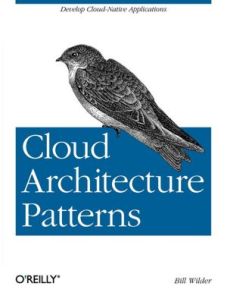
The core ideas were drawn from my Cloud Architecture Patterns (O’Reilly Media, 2012) book:

book-cover-medium.jpg

Hosted by Dell:

image

Talk: Architecting for the Cloud at Boston Code Camp #19

On Saturday March 9, 2013, I teamed up with Joan Wortman on a talk at the 19th (!) Boston Code Camp. Some of the patterns I discuss require some different thinking about application architecture, including aspects that impact the user experience (UX). I teamed up with Joan Wortman (who is a UX expert) to better include some context around how to deal with some of these UX challenges as they intersect with architecture.

I also hope to see many of the attendees at future Boston Azure meetings (held at same location as the Boston Code Camp – NERD in Cambridge, MA). Also feel free to post follow-up questions to this post or email me (codingoutloud on gmail) or ask me on twitter where I am @codingoutloud.

Here are a couple of questions that came up in the talk:

  1. How much does the cloud cost? As I mentioned, this is a question that deserves some discussion since it is not as simple as looking at the pricing calculator (which can be found here). Sometimes it will be less costly, sometimes more costly. (I did point out there is a free tier for Windows Azure Web Sites.) One major factor is the cost of resources (which is trending down over time). Another major factor is the impact of reducing resource usage when it is not needed; for example, consider a Line of Business application which is used only during business hours in North America and can be turned off completely (accruing no VM usage charges) during non-business hours/weekends/holidays; as another example consider that you don’t need to own resource for the “spike” at the Superbowl (like Shazam scenario described by Joan) since you can “give it all back” (stop paying) once the rush is over. There are also other considerations when you get into DR and HA and geo-distribution. (I wrote about RPO and RTO terms in the context Engineering for DR in the Cloud recently.) And still another factor is understanding what you are paying for — don’t forget the Iceberg idea — so do not compare pricing with those of traditional hosting (unless that’s what you really want) since hosting is not cloud computing!
  2. Why can I only access 32 messages at a time from the Windows Azure Storage Queue? This is the same limit when we talk about “peeking” (looking at what’s on the queue without removing it) and retrieving messages for exclusive access. I don’t know why this particular limit was chosen (why not 20? why not 100?) so could only speculate on that. The bottom line is that all messages can be accessed – sometimes requiring more than one call. I wish I had time to probe into the application scenario that would benefit from grabbing so many messages at once, but due to time constraints did not do that. I will answer the question further if I get a follow-up question.
  3. Where can I find the mail app that Joan mentioned? The Mailbox app is for iOS and can be found in your app store or directly on iTunes here: https://itunes.apple.com/us/app/mailbox/id576502633?mt=8 (and there’s a lot of press – such as this story here).
  4. OTHER QUESTIONS? Send ’em along!

Hope to see you at Boston Azure:

clip_image001_thumb.png

Much of the material for the talk also appears in my book:

Cloud Architecture Patterns book

Talk: How is Architecting for the Cloud Different?

On Thursday 07-February-2013 I spoke at DevBoston about “How is Architecting for the Cloud Different?”

Here is the abstract:

If my application runs on cloud infrastructure, am I done? Not if you wish to truly take advantage of the cloud. The architecture of a cloud-native application is different than the architecture of a traditional application and this talk will explain why. How to scale? How do I overcome failure? How do I build a system that I can manage? And how can I do all this without a huge monthly bill from my cloud vendor? We will examine key architectural patterns that truly unlock cloud benefits. By the end of the talk you should appreciate how cloud architecture differs from what most of use have become accustomed to with traditional applications. You should also understand how to approach building self-healing distributed applications that automatically overcome hardware failures without downtime (really!), scale like crazy, and allow for flexible cost-optimization.

Here are the slides:

How is Architecting for the Cloud Different — DevBoston — 06-Feb-2013 — Bill Wilder (blog.codingoutloud.com)

Here is the book we gave away copies of (and from which some of the material was drawn):

book-cover-medium.jpg

Ready to learn more about Windows Azure? Come join us at the Boston Azure Cloud User Group!

Boston Azure cloud user group logo

Sorting out Digital Certificates – Dec 2012 Boston Azure Meeting

At the December 13, 2012 meeting for Boston Azure Cloud User Group, I gave a short talk on how Digital Certificates work (cryptographically speaking).

The backstory is that Windows Azure uses certificates in a few different ways, and understanding the different types of certificate uses is key to understanding why these different ways of using and deploying certificates are the way they are.

The slide deck is here:

Sorting Out Digital Certificates – 13-Dec-2012 – Bill Wilder – Boston Azure


Spoke at Boston Code Camp #18 – Cloud Architecture Patterns for Building Cloud-Native Applications: align your architecture with the cloud’s architecture

What a joy to be part of Boston’s 18th Code Camp! First, many thanks to the organizing team and helpers:

And of course nothing would happen without support from the Sponsors:

Here is the abstract for my talk:

Just because we get an application to run on cloud infrastructure does ensure that it runs well. To truly take advantage of the cloud we need to build cloud-native applications. The architecture of a cloud-native application is different than the architecture of a traditional application. A cloud-native application is architected for cost-efficiency, availability, and scalability. We will examine several key architecture patterns that help unlock cloud-native benefits, spanning computation, database, and resource-focused patterns. By the end of the talk you should appreciate how cloud architecture is more demanding than you might be accustomed to in some areas, but with high payoff such as handling failure without downtime, scaling arbitrarily, and allowing aggressive cost-optimization.

All the concepts and patterns I spoke about are also discussed in my recently released book, Cloud Architecture Patterns:

Cloud Architecture Patterns book

More info on the book is here:

  • www.cloudarchitecturepatterns.com
  • If you do read the book and find it of value, I’d very much appreciate you considering a short review on Amazon, O’Reilly, or Barnes & Noble.

Got Azure or Cloud questions? Feedback on the book? Just want to stay in touch? Please feel free to reach out.

  • I can be reached via twitter (@codingoutloud)
  • I can also be reached via email (which is same as my twitter handle at gmail).
  • You can also find me through my blog (blog.codingoutloud.com)

The slide deck I used is here:

Architecture Patterns for Building Cloud-Native Applications — Boston Code Camp 18 — 20-Oct-2012 — Bill Wilder (blog.codingoutloud.com) – WITH SOME SLIDES HIDDEN

Spoke at CT .NET User Group about Cloud Architecture Patterns for Building Cloud-Native Applications in Windows Azure

On October 9, 2012, I was pleased to speak to the Connecticut .NET Developers Group. It was really fun since the crowd was extremely engaged. 🙂 There was a lot of good back-and-forth discussion.

This was the talk abstract:

Just because we get an application to run on cloud infrastructure does not ensure that it runs well. To truly take advantage of the cloud we need to build cloud-native applications. The architecture of a cloud-native application is different than the architecture of a traditional application. A cloud-native application is architected for cost-efficiency, availability, and scalability. We will examine several key architecture patterns that help unlock cloud-native benefits, spanning computation, database, and resource-focused patterns. By the end of the talk you should appreciate how cloud architecture is more demanding than you might be accustomed to in some areas, but with high payoff such as handling failure without downtime, scaling arbitrarily, and allowing aggressive cost-optimization.

All the concepts and patterns I spoke about are also discussed in my recently released book, Cloud Architecture Patterns:

Cloud Architecture Patterns book

More info on the book is here:

www.cloudarchitecturepatterns.com

If you do read the book, I’d very much appreciate a short review on Amazon.

Also, please stay in touch via twitter (@codingoutloud) or email (my twitter handle at gmail). Got Azure or Cloud questions? Feedback on the book? Please reach out.

And the slide deck I used is attached here:

Architecture Patterns for Building Cloud-Native Applications — CT.NET — 09-Oct-2012 — Bill Wilder (blog.codingoutloud.com)

Architecture Patterns for Building Cloud-Native Applications at NYC Code Camp 7

I am speaking today at NYC Code Camp 7. My talk is Architecture Patterns for Building Cloud-Native Applications here is the abstract:

Just because we get software to run on cloud infrastructure does not make it a good idea. To truly take advantage of the cloud we need to build cloud-native applications. The architecture of a cloud-native application is different than the architecture of a traditional application, an idea we will explore since it can impact costs, availability, and scalability. We will examine several key architecture patterns that help unlock cloud-native benefits, spanning computation, database, and resource-focused patterns. By the end of the talk you should appreciate how cloud architecture is more demanding than you might be accustomed to, but with high payoff such as handling failure without downtime, scaling arbitrarily, and allowing aggressive cost-optimization.

The slide deck is here:

Architecture Patterns for Building Cloud-Native Applications — NYC Code Camp 7 — 15-Sept-2012 — Bill Wilder (blog.codingoutloud.com)

Abstracting MapReduce with HIVE and Pig (notes from March 2012 Boston Azure Meeting)

A few notes from the March 29, 2012 Boston Azure cloud user group meeting

Jason Haley was the featured speaker and provided a fantastic overview of the Windows Azure SDK and related platform features.

My talk was the opening act. I extended on my Hadoop on Azure talk from February and climbed up the stack to talk about HIVE and Pig which generate MapReduce under the hood. I only used a few slides in the talk, but they have some useful references, and are available here: Hadoop-BostonAzure-29-Mar-2012.

These items were also mentioned at the meeting:

  • Boston Azure is on Twitter as @bostonazure
  • New England Give Camp 2012 (A handful of Boston Azure members are signed up – including (off the top of my head) me, Jason, Maura, Joan, and Gladys): http://newenglandgivecamp.org/
  • UX and Cloud studies were discussed and the vast majority of the attendees indicated they would prefer offers/opportunities be sent to/shared with the Boston Azure community – I will post on the Meetup.com distribution

Upcoming Boston Azure events include:

  • Tuesday April 24 – Michael Cummings from Magenic on building mobile games with a Windows Azure back-end (signup here)
  • Wednesday May 30 – SDK again – but this time will be hands-on – BYO laptop! (Tables and power strips will be provided.) (signup here)
  • Fri-Sat June 22-23 – TWO FULL DAYS of Bootcamp! (signup here (Fri) and here (Sat))
  • Thu June 28 – (Awesome topic TBD) – Michael Collier from Neudesic (signup here)
  • Thu July 26 – maybe CQRS? (signup here)

There was interest in incorporating some topics into future Boston Azure meetings:

  • Tools – what tools are useful in building/managing/monitoring cloud applications, especially Azure ones (PowerShell, cspack, Cerebrata, Storage Explorer from CodePlex, CloudBerry Explorer for Azure Blob Storage, monitoring tools, IntelliTrace from Visual Studio Ultimate, other Visual Studio tips/tricks, …)
  • Comparisons of Azure with other clouds, e.g., OpenStack, AWS, Eucalyptus (note: AWS and Eucalptus are now partners), Rackspace, others…
  • More big data via Hadoop on Azure (maybe a whole dedicated meeting is in order)