Category Archives: Bill gave a talk

July Boston Azure User Group – Recap

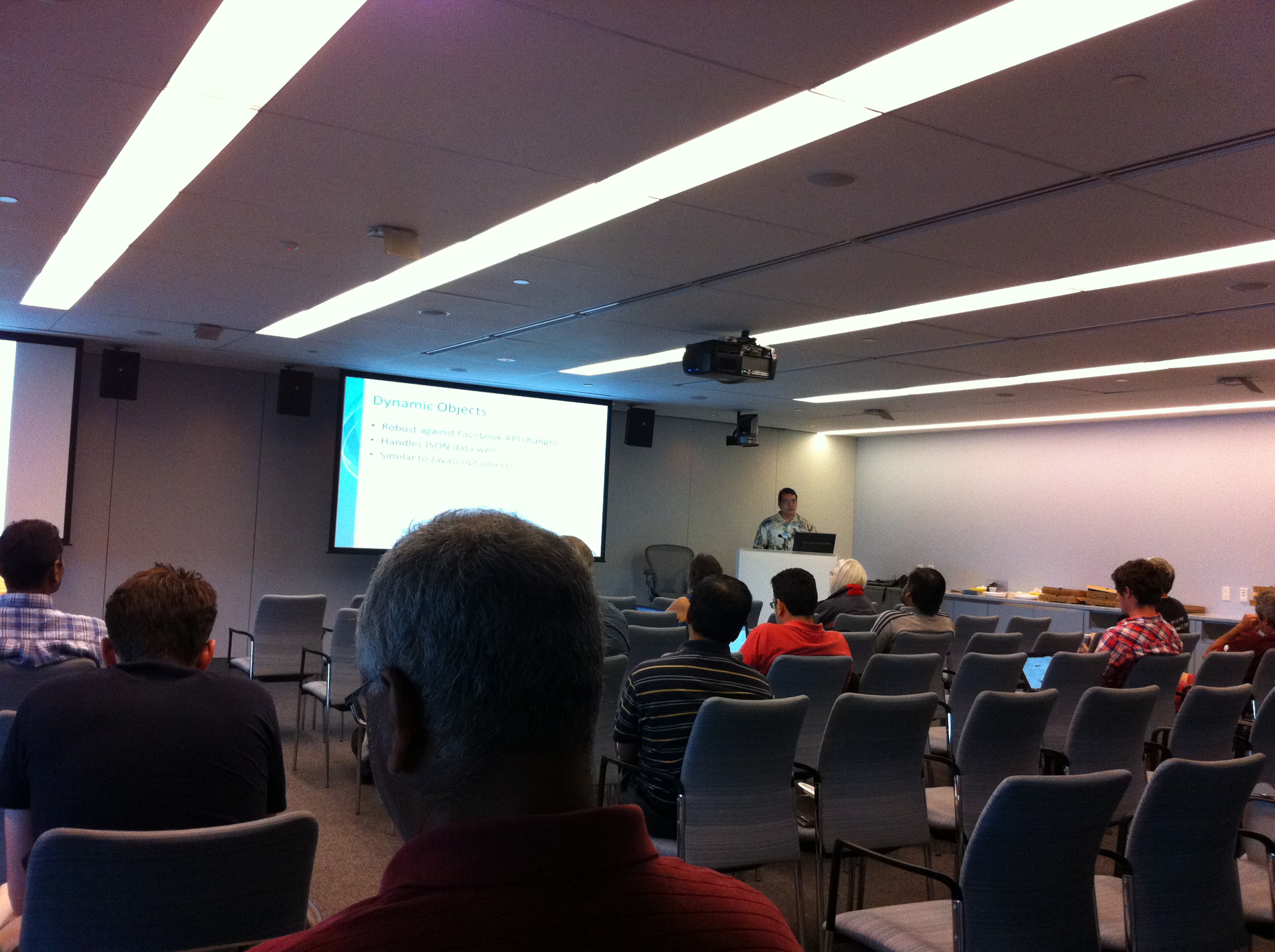
The July Boston Azure User Group meeting had a tough act to follow: the June meeting included a live, energy-packed Rock, Paper, Azure hacking contest hosted by Jim O’Neil! The winners were chosen completely objectively since the Rock, Paper, Azure server managed the who competition. First prize was taken by two teenagers (Kevin Wilder and T.J. Wilder) whose entry beat out around 10 others (including a number of professional programmers!).

This month’s July Boston Azure User Group meeting was up for the challenge.

Hope to see you at the Boston Azure meeting in August (Windows Phone 7 + Azure), two meetings in September (one in Waltham (first time EVER), and the “usual” one at NERD), and then kicking off a two-day Boston Azure Bootcamp!

Details on ALL upcoming Boston-area events of interest to Azure folks (that I know about) can be found in this blog post about Boston-events in August and September. Those hosted by Boston Azure are also at www.bostonazure.org and the upcoming events page.

Talk: Architecture Patterns for Scalability and Reliability in Context of Azure Platform

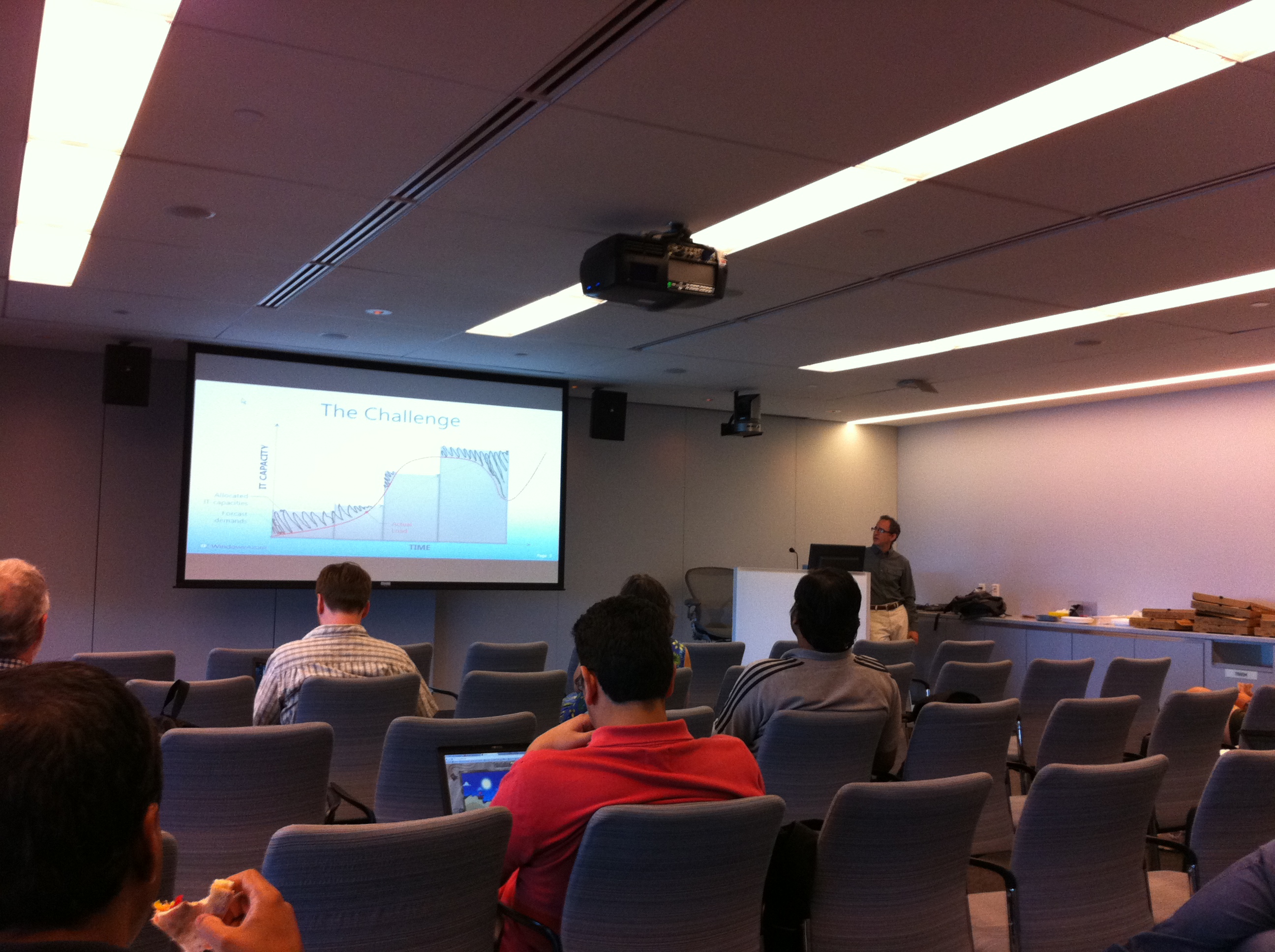
I spoke last night to the Boston .NET Architecture Study Group about Architecture Patterns for Scalability and Reliability in Context of the Windows Azure cloud computing platform.

The deck is attached at the bottom, after a few links of interest for folks who want to dig deeper.

Command Query Responsibility Segregation (CQRS):

Sharding is hard:

NoSQL:

CAP Theorem:

PowerPoint slide deck used during my talk:

Intro to Azure and ACS Talk to NE ASP.NET User Group

Tonight I spoke to an enthusiastic and engaged group at the New England ASP.NET Professionals User Group about the cloud, the Windows Azure Platform, and how ASP.NET professionals can take advantage of it. Thanks for all the great questions and discussion! Some points brought up or discussed:

  • Development tools for Azure are available for free
  • Azure provides an excellent cloud simulation environment on your desktop
  • Not every application is a good fit for the cloud – for example, a small app that doesn’t need to scale and need not be highly available might fit better with a less costly hosted solution
  • When comparing costs of Azure with other approaches, keep in mind that Azure is a robust, highly available, scable, flexible platform – what you get for your dollar is often of much greater value than the dollar you spend for some other types of solution
  • Azure affords fantastic cost-saving opportunities through the flexible scale down model – don’t need a data or compute resource anymore? stop using it, and you’ll stop paying for it. Try that kind of “on-a-dime” manuever with a hosted solution, with hardware you purchase, or rack space you lease
  • Azure services are available a la carte – though of course they are also a fantastic approach when used all together
  • There are a number of ways to auto-scale, though don’t underestimate the boundary conditions and there are also some nuances

Since I did only give a taste of the Access Control Service, the plan discussed was for me to come back after the summer for a deeper dive into that fascinating topic.

Although I did not proceed linearly through it, here is the deck I used: [neasp.net-bill_wilder-intro-cloud-azure-acs-for-asp.net-devs-15-june-2011]. The Access Control Service (ACS) content did not include any slides – all talk and demo – though I gave a similar talk at Boston Azure back in February that used the following deck: [Solving the Identity Crisis-using-azure-cloud-access-control-service-(ACS)-talk-24-Feb-2011-Boston-Azure-User-Group] (Since then, the final ACS v2 has been release and changed a few things.)


New Hampshire Code Camp #3 (and my talks)

Today I attended (and spoke at) the New Hampshire Code Camp 3 in Concord, NH.

Here’s how my day went:

  1. Spoke about the cloud and Azure’s role in the cloud. Special thanks to Corinne, Sandra, and Matthew for the excellent questions and discussion. Here is the slide deck (new-hampshire-code-camp-3-concord-bill_wilder-demystifying_cloud_computing_and_azure-04-june-2011.ppt) – though I didn’t use much of it! – we freestyled a lot. Of particular interest to attendees of this talk. check out my post called “Azure FAQ: How much will it cost me to run my application on Windows Azure?” (actually posted “tomorrow” – the day after I posted this note from code camp).
  2. Was torn between Phil Denoncourt‘s talk on “25 Things I’ve Learned about C# over the past 10 years” and Andy Novick‘s talk on SQL Azure. Ended up hanging out for Andy’s talk to see if there was anything new in SQL Azure and to get his take on the awesomeness that is SQL Azure Federations.
  3. Lunch break
  4. Spoke about Architecture Patterns for the Cloud. Here is the slide deck: New-Hampshire-Code-Camp-3-Concord-_bill_wilder_-_cloud_scalability_patterns_in_windows_azure_platform_-_04-june-2011 – we talked focused on three specific scalability patterns and how you might implement those on the Windows Azure Platform: Sharding, NoSQL Data (and eventual consistency), and CQRS.
  5. Watched Udai Ramachandran talk about Windows Azure AppFabric Caching in the final session.

GITCA 24 Hours in the Cloud – Scale On!

GITCA‘s 24 Hours in the Cloud is under way!

Thursday morning at 5:00 AM – my time, which is Eastern Time (Boston) – I will be delivering one of these sessions to the world. This is also 2:00 AM PST, and 10:00 AM UTC. But the key for me is that it is 5:00 AM in the morning in my time zone. Just sayin… 🙂

My “talk” is scalability concepts and patterns that are relevant for cloud applications, with most examples given using Windows Azure. I put “talk” in quotes since the video is pre-recorded – I will be there however answering questions – live – via Twitter. The public can join the free and easy-access broadcast, and participate via twitter using the #24HitC hashtag. (My personal Twitter handle is @codingoutloud.)

Speakers and Sessions are listed on GITCA’s site. Here is the Cloud Scalability Patterns – 24 Hours in the Cloud presentation as a PDF. I will update this post when (if?) a direct link to the video presentation becomes avaialble.

I look forward to meeting you on the Twitters in a few hours! I look forward to your candid feedback and tough questions.

Spoke about Azure and Cloud at New Hampshire .NET User Group

I was the guest speaker at the May 25th meeting of the New Hampshire .NET (NHDN) user group in Concord, NH at the New Hampshire Technical Institute.

Here is the slide deck I used for the talk: Demystifying Cloud Computing and the Windows Azure Platform.

Scaling Cloud Applications – Birds of a Feather (“BOF”) Session at TechEd

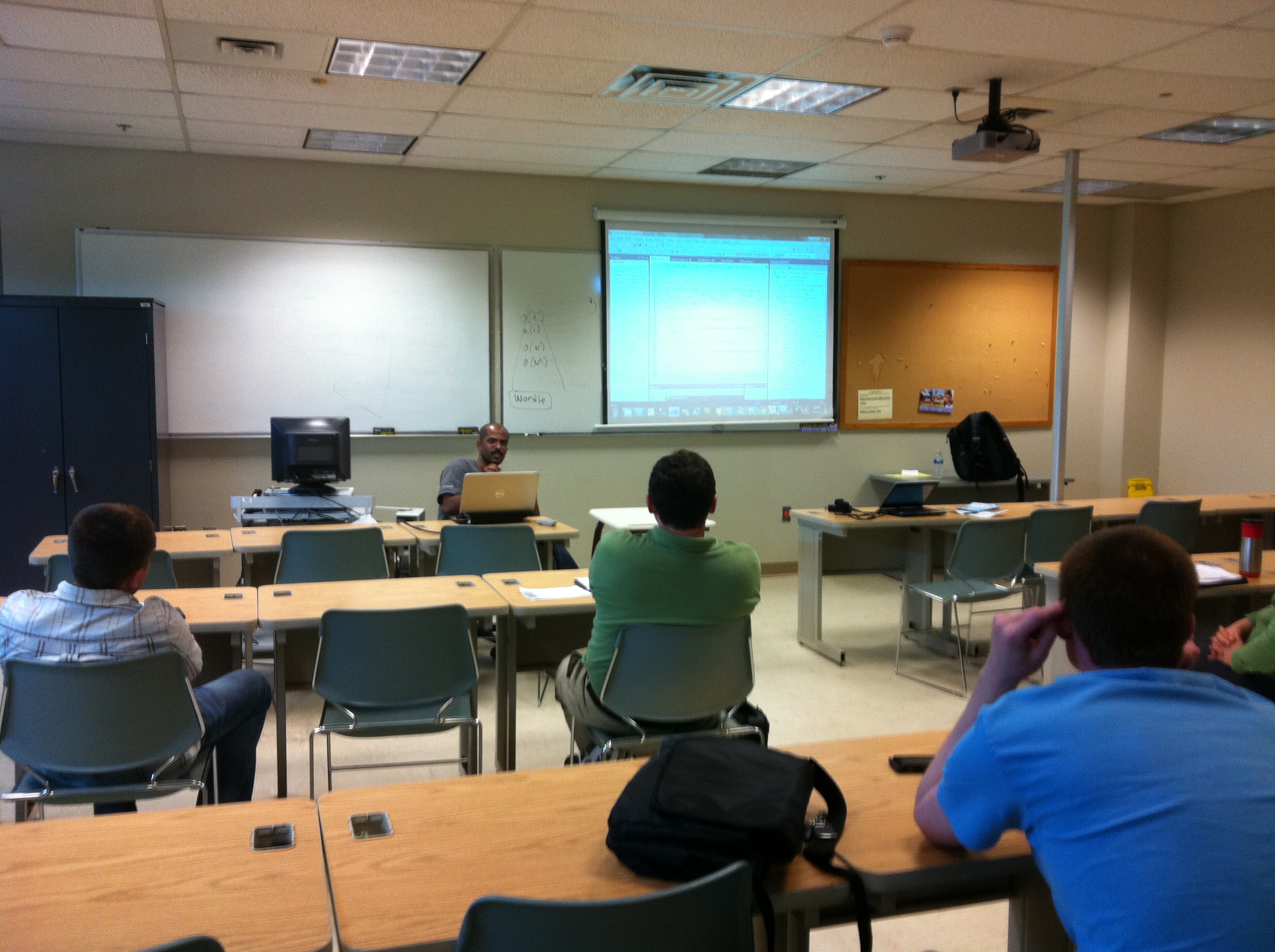
Today at TechEd in Atlanta, I served as discussion leader for a Birds of a Feather (BOF) session on Scaling Cloud Applications. The session had around 20 people in the room, and an unknown number watching the live stream, some of whom actively participated over Twitter.
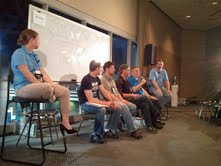
"Bird's Nest" Panel

Some of the topics discussed:

  • SaaS vs. PaaS vs. IaaS, including the blurring of the lines between them
  • Scale Up vs. Scale Out vs. Scale back down — elastic scale means you pay for what you use — just start (or stop) using the resources you need and the billing will reflect this usage
  • Scale has many dimensions, some of which are Geographic Distribution of and Number of Users, Amount of Data, and Needed Computation Power
  • Cloud applications are architected differently, often decoupling user-facing functionality from services – the front-end may communicate with the back-end using a reliable queue (such as offered by Windows Azure); see CQRS pattern
  • There are many application architecture concepts that are shared across applications built for most cloud vendors – for example, the loosely coupled front-end/queue/back-end scenario mentioned above can be implemented on Windows Azure (which provides Web Roles, reliable queues, and Worker Roles) or Amazon (which allows you to build and upload a Virtual Machines for front-end and back-ends, plus offers a reliable queuing service), other cloud platforms, and even on-premise – the cloud services just make these more natural to implement
  • Improving latency for cloud applications might be facilitated through a Content Delivery Network (CDN), geographic load balancing (such as through Windows Azure Traffic Manager), and other techniques

Many thanks to all who participated, including:

The BOF events were very well run by the INETA team (Chris Pels and a few others).

If you want a more structured treatment of some of the same scalability concepts, feel free to check out my talk on Cloud Scalability Patterns coming on June 1/June 2 via the GITCA “24 Hours in the Cloud” event. Here is the generic event description – follow the link to find out when my talk is slotted in.

Come and get your Cloud geek on! On 1st June, 2011 GITCA and Microsoft are running an event called “24 Hours in the Cloud”. There will be 24 one hour sessions around the world covering a wide range of Cloud Computing topics. The presenters will be live on twitter to answer your questions. I will be one among them. There is something for everybody, developer, IT pro and SQL enthusiast. There is no question that Cloud Computing is here to stay and this is a unique opportunity to be educated and gain an insight as to where Cloud Computing is going. Stay tuned for more details, such as how to join the “Cloud 24 hour party”, as the event date approaches.

If you have more questions on the topic, feel free to put in on twitter (@codingoutloud), you can comment on this blog post, or you can email me (coding out loud at gmail). And, finally, below you can find the  Twitter stream from the live event – latest on top, earliest on bottom – (which I salvaged via research.ly). Scale on!

@techedbof20117 hrs ago
BOF12-DEV on Cloud Computing is now coming to an end. #bofdev #msteched

@techedbof20118 hrs ago
Mobile apps are a big area for growth in the cloud computing area.
#bofdev #msteched

@techedbof20118 hrs ago
Talking about moving existing apps to the cloud as we near the session conclusion.
#bofdev #msteched

@techedbof20118 hrs ago
When you scale you can select the instance size in Azure. #bofdev #msteched

@techedbof20118 hrs ago
Decoupling front end from back end processing is an important concept. #bofdev
#msteched

@techedbof20118 hrs ago
For scaling, one experience is knowing how much work to do and
how much an instance can process in an hour. #bofdev #msteched

@techedbof20118 hrs ago
Would be nice if the Azure platform would monitor and scale for you.
#bofdev #msteched

@techedbof20118 hrs ago
@itagsubbu Great to have you join us. #bofdev #msteched

@itagsubbu8 hrs ago
@techedbof2011 Thanks for asking my question. I am watching this live event.
#bofdev #msteched

@techedbof20118 hrs ago
@itagsubbu Yes you can scale either on a scheduled basis or in a programmatically
#bofdev #msteched

@itagsubbu8 hrs ago
@techedbof2011 #bofdev #msteched Can we scale up for certain period in an year?

@rileybeebs8 hrs ago
RT @jmilgram: Getting ready to attend Bill Wilder @codingoutloud Designing Scalable
Cloud Applications #bofdev session at TechEd #mstech ...

@techedbof20118 hrs ago
Gmail is an example of SaaS #bofdev #msteched

@techedbof20118 hrs ago
How do you get resources to the cloud platform? #bofdev #msteched

@techedbof20118 hrs ago
IaaS eliminates the infrastructure but you admin, for PaaS both roles are eliminated
#bofdev

@techedbof20118 hrs ago
As you scale out across geographically dispersed data centers what is the impact on
SQL Aszure costs? #bofdev

@jimoneil8 hrs ago
blurring of IaaS and PaaS is something interesting as well... becoming less of a
differentiator? #bofdev

@techedbof20119 hrs ago
Silverlight app has 50K updates/sec #bofdev

@techedbof20119 hrs ago
Silverlight app that was not designed for the cloud. What to do? #bofdev

@techedbof20119 hrs ago
Thoughts on WPF app w/ Azure backend? Are you doing that? #bofdev #msteched

@techedbof20119 hrs ago
BOF12-DEV on designing scalable cloud applications is getting started
#bofdev #msteched

@TashasEv9 hrs ago
RT @jmilgram: Getting ready to attend Bill Wilder @codingoutloud Designing Scalable
Cloud Applications #bofdev session at TechEd #mstech

@TashasEv9 hrs ago
@rileybeebs I haven't forgotten about you! just haven't been able to leave the
#BOFDEV sessions at all yet!

@TashasEv9 hrs ago
The next #MSTechEd #BOFDEV : Designing Scalable Cloud Applications lead by
@codingoutloud

@techedbof20119 hrs ago
The next #MSTechEd #BOFDEV : Designing Scalable Cloud Applications
lead by @codingoutloud

@techedbof20119 hrs ago
RT @jimoneil: RT @codingoutloud my 1:30 TechEd session on Designing Scalable
Cloud applications #msteched #bofdev << will be heckling from afar!

@jimoneil9 hrs ago
RT @codingoutloud my 1:30 TechEd session on Designing Scalable Cloud applications
#msteched #bofdev << will be heckling from afar!
New England Code Camp 15

I attended New England Code Camp 15 today and attended a bunch of interesting talks, and I also gave a couple of talks myself. (Links to my slide decks are included below.)

At my talks, I mentioned the Windows Azure Pass – a 30 day FREE pass for using Windows Azure Compute (IIS or Worker Roles), SQL Azure, Azure Blobs/Tables/Queues, etc. If you didn’t get a handout at talk, no worries! – You can still access the offer: Go here and use Promo Code BILLONAZURE. Let me know if you have any questions or if you use the promotion.

Talks I attended:

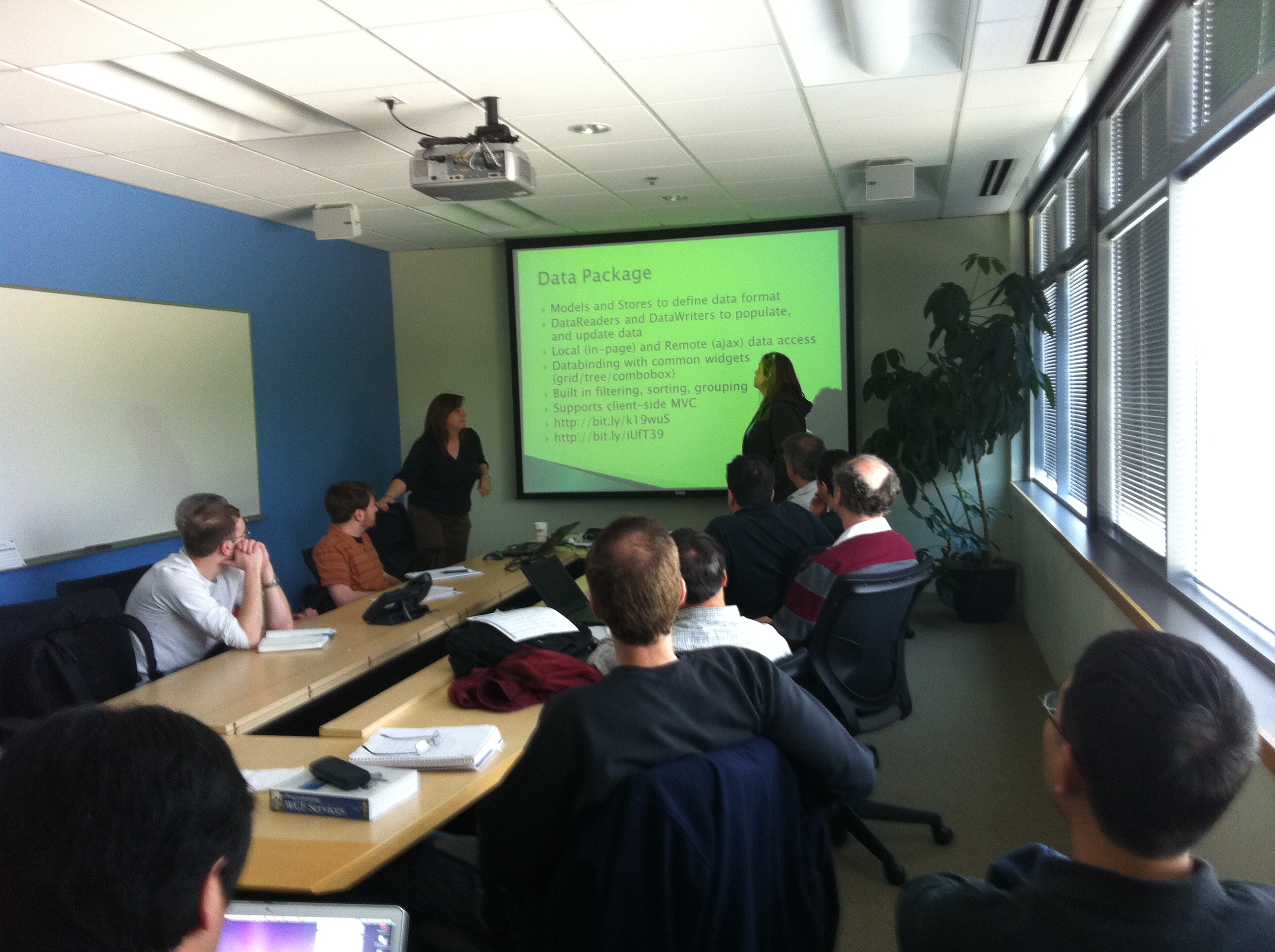
  • Maura Wilder and Joan Wortman‘s talk on the Ext JS JavaScript framework (which I learned has an incredibly rich widget library and robust  programming model).
  • Richard‘s talk on becoming a better developer.
  • Ben Day‘s talk on 7 Lessons Learned during his first large Silverlight dev project. Find out more by reading Ben’s article on same topic, starting here.
  • Steve Maier‘s talk on using Azure-hosted WCF services to serve as your mobile application’s back-end.
  • Chris Bowen on HTML 5.

My presentations (including links to the PowerPoint slide decks):

Many thanks to Chris Pels, Chris Bowen, and especially Patrick Hynes for such a great event! Thanks also to Telerik and Wintellect for sponsoring our food!

Also enjoying hanging out afterwards at Uno’s with Maura, Joan, George Babey, John Garland, Jesse Liberty, Pat Tormey, Chris, Veronica and Shawn Robichaud, Ron, and several other folks I didn’t get to say hello to…

My SQL Saturday Talk: “Storing Data in the Cloud: Beyond SQL Azure”

I spoke today at SQL Saturday #71 where I gave a talk on “Storing Data in the Cloud: Beyond SQL Azure” where I talk about the following:

  • What is the Cloud
  • How does SQL Azure compare with SQL Server
  • What are the other storage options available on the Windows Azure Platform

There were many interesting questions from the audience of 20 or so people – One asked (paraphrasing here..) “Are the Microsoft Data Centers resilient to the radiation expected from a nuke” to which I did not have a good answer. To another question, Jeff Mlakar (@JeffMlakar) offered helpfully that the SQL Azure Data Sync service is an option for SQL Azure backups to on-prem and with geo-replicating SQL Azure across data centers.

We didn’t get to the end of the material due to lots of discussion… but we did get through the most critical concepts.

Beyond Virtualization – Welcome to the Cloud

Virtualization – of the server, desktop, application, storage, network, and more – was a seriously disruptive force in the previous decade. Virtualization – in concert with cheap & capable commodity hardware, automation galore, ubiquitous connectivity, and some new business models – will give way to Cloud Computing during the coming decade.

Today at the Virtualization Boston Deep Dive Day 2011 event (put on by the Virtualization Group-Boston), I joined forces with the ITProGuru (aka Mr. Dan Stolts) to share some thoughts in a presentation on this megatrend – what’s going on, what it means for data centers, and what today’s IT Pro might expect from a Cloud-dominated future.

The slides are available here:

Cloud Computing Essentials for the IT Pro – Bill Wilder and Dan Stolts – 11-Mar-2011

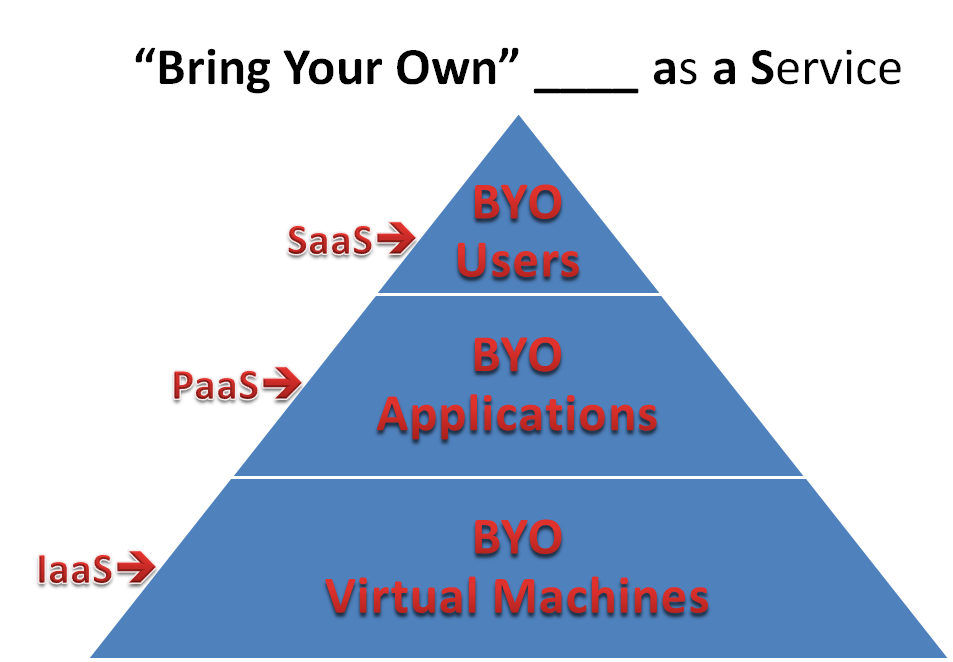
The following was not a slide all by itself, but could have been – and I think I’ll use it next time for the simplest definition I can think of for understanding SaaS, PaaS, IaaS:

I also posted a twitter-sized definition of SaaS, PaaS, and IaaS.